
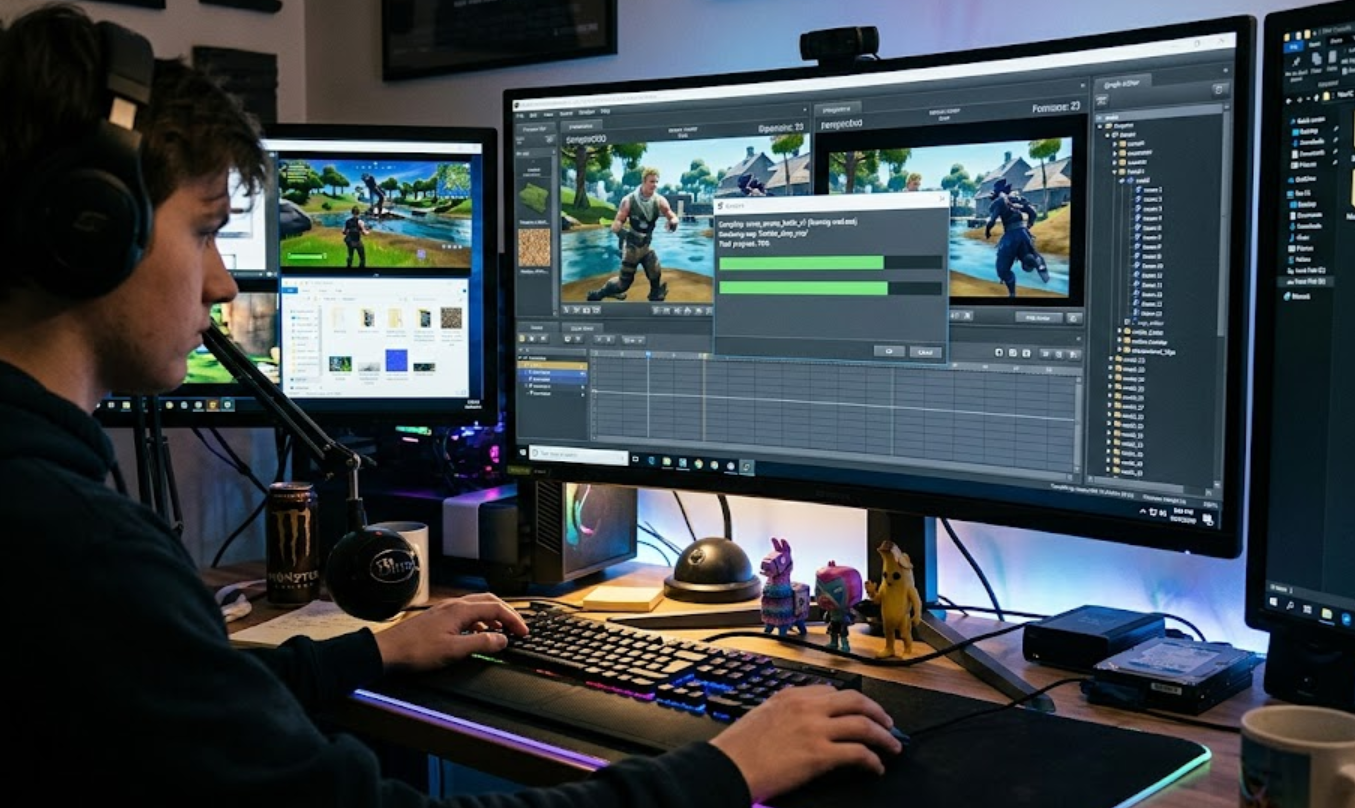
The phrase sfm compile fortnite is often misunderstood as a direct technical process, but in reality it refers to a broader workflow of adapting Fortnite-style or Unreal Engine–based character assets for use in Source Filmmaker. SFM itself does not support Fortnite models natively, so “compiling” in this context means converting and rebuilding a model so it fits the Source engine’s requirements, including its specific skeleton structure, materials, and file formats. This process is less about Fortnite specifically and more about bridging two completely different game engines.
In practical terms, users searching this keyword are usually trying to achieve one goal: bringing a high-quality game character into SFM for animation or cinematic projects. However, since Fortnite assets are built for Unreal Engine, they cannot be directly imported or used. Instead, creators rely on intermediate steps like exporting to FBX, adjusting the model in Blender, and then compiling it into Source-compatible formats. Understanding this distinction is crucial because it clarifies that “sfm compile fortnite” is not a single tool or shortcut—it is a multi-step conversion pipeline involving asset reconstruction rather than direct compatibility.
Legal & Asset Ownership Considerations
When discussing sfm compile fortnite, it’s important to understand that not all game assets are freely usable outside their original environment. Fortnite models, textures, and animations are protected under Epic Games’ intellectual property rights. This means they are intended for use only within the Fortnite ecosystem or other officially permitted Epic Games tools. Attempting to extract, redistribute, or publicly share modified Fortnite assets can violate these terms, especially in commercial or published projects.
For creators, this doesn’t mean you cannot achieve similar results in Source Filmmaker—it just means you need to work within proper boundaries. Many SFM artists use original character models, commissioned assets, or freely licensed 3D models that resemble Fortnite’s style without directly copying it. This approach keeps projects safe, publishable, and sustainable. In professional workflows, respecting asset ownership is just as important as technical skill, because it ensures your work can be shared without legal complications or takedown risks.
Required Tools for the SFM Compilation Pipeline
Working with sfm compile fortnite–style workflows requires a set of tools that act as bridges between Unreal Engine formats and Source Filmmaker’s compilation system. Since SFM cannot directly read Fortnite or Unreal assets, you need software that can import, adjust, and re-export models into Source-compatible formats. The most commonly used tool in this pipeline is Blender, which acts as the central workspace for model editing, rigging, and format conversion.
Alongside Blender, creators rely on the Source SDK tools, particularly the model compiler known as studiomdl, which transforms QC scripts and mesh data into usable SFM models. Additionally, community-developed plugins like Blender Source Tools help export models into SMD or DMX formats. Without this combination of tools, the conversion process simply cannot happen, because each tool handles a different stage of the pipeline—from importing FBX files to final compilation inside the Source engine environment.
Converting Unreal/FBX Assets for Source Filmmaker
In the sfm compile fortnite workflow, one of the most critical steps is converting Unreal Engine–based or FBX-exported assets into a format that Source Filmmaker can eventually understand. Since Fortnite assets originate in Unreal Engine, they are typically first exported into FBX format (when legally permitted or when using your own Unreal content). FBX acts as a neutral bridge format that most 3D software, including Blender, can import without losing too much structural data.
Once inside Blender, the model often requires significant adjustment before it can move forward in the pipeline. This includes checking scale, fixing orientation issues, and ensuring the skeleton structure is compatible with Source’s bone system. Unreal rigs do not match Source Filmmaker’s expectations, so even a successful FBX import is only the beginning. The real work lies in restructuring the model so that it behaves correctly once compiled, because SFM relies heavily on strict rigging rules and predefined bone naming conventions.
Blender Workflow for Rigging & Model Cleanup
In the sfm compile fortnite pipeline, Blender is where most of the actual “rebuilding” happens. Once a model is imported from FBX or another intermediary format, it rarely arrives in a usable state for Source Filmmaker. Materials may be broken, bones may be misaligned, and scale often needs correction. The first step in Blender is cleaning the scene—removing unnecessary objects, fixing mesh errors, and ensuring the character is properly centered and scaled for Source units.
Rigging is the next major phase, and it is often the most time-consuming part of the workflow. Source Filmmaker relies on a specific skeletal structure, so the model’s bones must be adjusted or completely reworked to match Source conventions. This includes renaming bones, aligning joints, and making sure the hierarchy behaves correctly during animation. Weight painting is equally important because even small errors can cause severe deformation once the model is compiled. A clean Blender setup at this stage directly determines how stable the final SFM model will be.
Compiling Models into SFM Using the QC Pipeline
At this stage of the sfm compile fortnite workflow, the focus shifts from editing in Blender to preparing the model for Source Filmmaker through the QC compilation system. This is where all the cleaned mesh data, rigging work, and exported SMD/DMX files come together into a structured set of instructions. The QC file acts as a blueprint, telling the Source engine how to assemble the model, assign textures, define hitboxes, and connect animations.
Once the QC file is properly configured, it is processed using the Source engine’s model compiler, commonly known as studiomdl. This tool converts all the prepared assets into a format that SFM can load and recognize. If anything in the QC script is incorrect—such as bone names, file paths, or material references—the compilation will fail or produce broken results. Because of this, precision is extremely important during this stage. A successful compile means the model is now fully integrated into the Source Filmmaker environment and ready for animation use.
Troubleshooting & Optimization Tips
In the sfm compile fortnite workflow, errors are extremely common, especially for beginners working between Unreal-style assets and Source Filmmaker’s strict compilation system. One of the most frequent issues is broken rigs after import, usually caused by mismatched bone names or incorrect hierarchy setups in Blender. When this happens, animations may twist unnaturally or fail to play altogether in SFM. Another common problem is missing textures, which often results from incorrect VMT/VTF references in the QC file or improper material conversion during export.
Optimization is just as important as fixing errors. Keeping the model’s polygon count reasonable ensures smoother performance inside SFM, which is not designed for modern high-density game assets. Proper texture compression and clean UV mapping also reduce loading issues and visual glitches. Many experienced creators recommend testing the model in small stages—first checking the mesh, then the rig, and finally the compiled version—rather than attempting a full pipeline run in one go. This step-by-step validation approach helps isolate issues early and prevents wasted time during compilation failures.
Conclusion
The idea behind sfm compile fortnite is less about a direct tool and more about understanding how two very different systems—Unreal Engine and Source Filmmaker—can be connected through a structured 3D workflow. Since SFM cannot natively support Fortnite assets, the entire process depends on reconstruction: exporting, cleaning, rigging, and compiling models into Source-compatible formats. Once you understand that this is a pipeline rather than a shortcut, the workflow becomes much clearer and easier to manage.
FAQs
1. Can I directly import Fortnite models into SFM?
No, Fortnite models cannot be directly imported into Source Filmmaker because they are built for Unreal Engine and require conversion and recompilation.
2. What does “sfm compile fortnite” actually mean?
It refers to the process of adapting Fortnite-style or Unreal Engine assets into Source Filmmaker using conversion tools and the QC compilation pipeline.
3. What software do I need for this workflow?
You typically need Blender, Source SDK tools, and a compiler like studiomdl to prepare and compile models for SFM.
4. Is it legal to use Fortnite assets in SFM projects?
Using Fortnite assets outside their intended environment may violate Epic Games’ terms, so it’s recommended to use original or properly licensed models instead.
For More Gossip’s and Information Visit Star Story Time
