
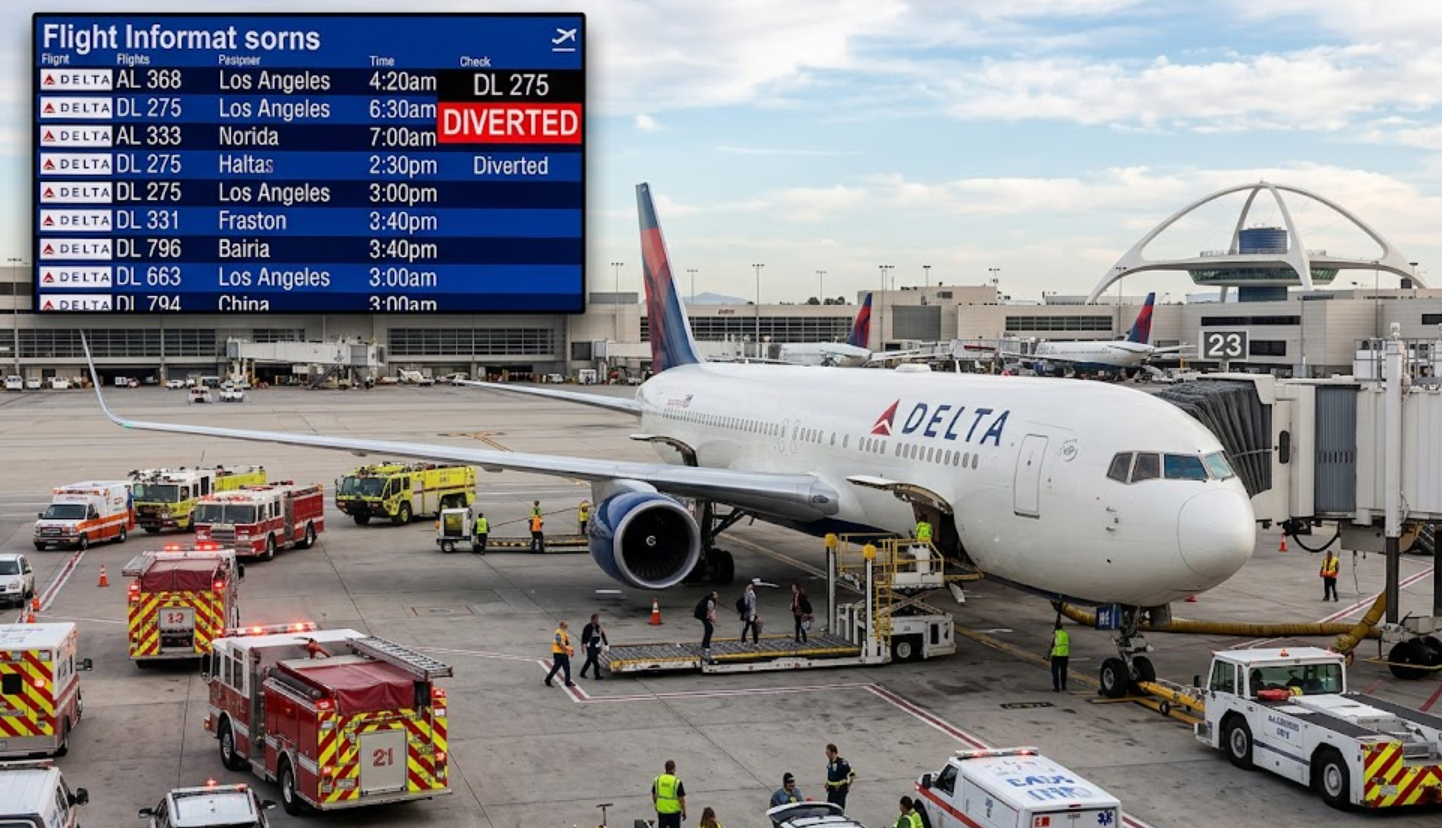
The incident involving Delta Flight DL275 Diverted LAX began during the cruise phase over the Pacific Ocean, when the flight crew identified a potential technical irregularity that required attention. At such high altitudes and long distances from the destination, even a minor system alert is treated with caution, as options for landing become limited the farther the aircraft travels. In this case, the pilots followed standard aviation safety procedures by assessing the situation carefully and deciding not to continue the journey to Atlanta. Instead, they opted to divert the aircraft to Los Angeles International Airport, a major hub equipped to handle such situations efficiently. The cabin remained calm, and passengers were managed professionally, indicating that the situation was under control rather than an immediate emergency.
Why the Aircraft Diverted to LAX
The decision behind Delta Flight DL275 Diverted LAX was rooted in both safety protocol and geographic advantage. When a technical concern arises during a transpacific flight, pilots must quickly evaluate the nearest suitable airport that can handle a wide-body aircraft and provide immediate maintenance support. Los Angeles International Airport (LAX) is one of the most strategically positioned diversion hubs for flights traveling between Asia and the United States. Its long runways, advanced emergency infrastructure, and availability of Delta’s ground support made it the most practical and safest choice under the circumstances.
Another key factor in choosing LAX is its ability to minimize disruption while maximizing safety. Instead of continuing across the ocean with uncertainty, the crew prioritized a controlled landing at a well-equipped airport where passengers could be safely assisted and the aircraft thoroughly inspected. This aligns with aviation best practices, where precautionary diversions are encouraged rather than delayed. In the case of Delta Flight DL275 Diverted LAX, the decision reflects how modern aviation emphasizes proactive risk management, ensuring that even minor technical concerns are addressed before they can escalate into more serious issues.
Emergency Response at Los Angeles International Airport
When Delta Flight DL275 Diverted LAX approached Los Angeles International Airport, emergency protocols were activated as a precautionary measure. Fire crews, medical teams, and airport response units were placed on standby, which is a standard procedure whenever a flight reports a potential technical issue. The aircraft landed safely without incident, and responders were ready to act immediately if needed, though no injuries or visible hazards were reported. This coordinated response highlights how major airports like LAX are fully prepared to handle unexpected situations, ensuring passenger safety remains the top priority from touchdown to disembarkation.
Passenger Experience and Airline Support
For those onboard Delta Flight DL275 Diverted LAX, the experience was understandably unexpected, but reports suggest it was handled in a calm and organized manner. Flight attendants are trained to manage uncertainty with clear communication, and in this case, passengers were informed about the diversion without unnecessary alarm. While a change in route can be stressful—especially on a long-haul international journey—the controlled environment onboard helped maintain reassurance. Most travelers remained seated and cooperative, trusting the crew’s professionalism and the airline’s safety-first approach.
After landing, Delta Airlines focused on assisting passengers with rebooking and accommodations. Long-haul diversions often disrupt travel plans significantly, so airlines typically arrange alternative flights, hotel stays, and meal vouchers when needed. In the Delta Flight DL275 Diverted LAX situation, ground staff worked to manage logistics efficiently, ensuring passengers could continue their journeys with minimal inconvenience. This level of support plays a crucial role in maintaining customer trust, even when unexpected operational issues arise.
Aviation Safety Protocols Explained
The case of Delta Flight DL275 Diverted LAX highlights how aviation safety protocols are designed to prioritize caution over convenience. Airlines operate under strict regulatory frameworks set by authorities like the FAA, which require pilots to take immediate action if any system irregularities are detected. Even if the issue seems minor, pilots are trained to assess risks carefully and choose the safest course of action, which often includes diverting to the nearest suitable airport. This layered approach ensures that potential problems are addressed long before they can escalate into serious incidents.
A key part of these protocols involves continuous communication between the flight crew, airline operations centers, and air traffic control. Once the decision to divert is made, coordination begins instantly to secure landing clearance, prepare emergency services, and notify ground teams. In the Delta Flight DL275 Diverted LAX scenario, these systems worked seamlessly, demonstrating how well-coordinated aviation safety measures are in real-world situations. Such protocols are not just reactive—they are proactive safeguards built into every stage of flight operations to protect passengers and crew at all times.
Impact on Delta Airlines Operations
The Delta Flight DL275 Diverted LAX incident likely caused a temporary ripple effect across Delta’s broader flight schedule, particularly for routes connected to the affected aircraft. When a long-haul international flight is diverted, it can lead to aircraft repositioning delays, crew scheduling adjustments, and cascading impacts on subsequent flights. Airlines typically have contingency systems in place to manage such disruptions, but operational efficiency can still be affected, especially when dealing with large, wide-body aircraft used for transpacific routes.
Expert Insights and Industry Reactions
Aviation experts analyzing the Delta Flight DL275 Diverted LAX incident have generally emphasized that such diversions are a sign of a well-functioning safety system rather than a failure. Industry analysts point out that modern aircraft are equipped with advanced monitoring systems that can detect even the smallest irregularities, allowing pilots to act before a situation escalates. This proactive approach is considered a cornerstone of aviation safety, and experts agree that the crew’s decision to divert reflects strong adherence to industry standards.
Industry reactions also highlight the importance of pilot training and decision-making in high-pressure situations. Experienced aviation professionals note that the ability to quickly evaluate risks and choose the safest course of action is what keeps commercial aviation among the safest modes of transportation. In the case of Delta Flight DL275 Diverted LAX, the coordinated response from the flight crew, airline operations, and airport authorities demonstrates how multiple layers of safety work together to protect passengers. Many experts have described the event as a textbook example of precautionary aviation practices in action.
Conclusion
The Delta Flight DL275 Diverted LAX incident serves as a clear example of how modern aviation prioritizes safety above all else. While the diversion initially raised concerns among passengers and observers, the situation ultimately demonstrated the effectiveness of well-established safety protocols, quick decision-making, and coordinated emergency response systems. From the moment the issue was detected mid-flight to the safe landing at Los Angeles International Airport, every step reflected a controlled and professional handling of a potentially risky scenario. The event reinforces the idea that diversions are not signs of failure, but rather evidence that safety systems are working as intended to protect everyone onboard.
FAQs
1. Why did Delta Flight DL275 divert to LAX?
The flight diverted due to a precautionary technical or mechanical concern detected mid-flight, prompting the crew to choose the nearest suitable airport for safety.
2. Were there any injuries on Delta Flight DL275?
No, reports indicate that all passengers and crew landed safely with no injuries.
3. Is a flight diversion a common occurrence?
Yes, diversions are a standard safety procedure in aviation and occur when pilots identify potential issues that require immediate attention.
4. How does Delta handle passengers after a diversion?
Delta typically provides rebooking, accommodation, and support services to help passengers continue their journey with minimal disruption.
For More Gossip’s and Information Visit Star Story Time
